Imagine you take your car to a mechanic and tell them: "My battery keeps dying. Do I need a new battery?"
The mechanic checks it over. The battery is weak. They say yes.
That answer may be completely sound. But there's one thing the mechanic doesn't know: you mostly use the car for short fifteen-minute trips. The battery loses a bit of power every time the car starts, and your drives are often too short for it to charge back up. You knew you only drove short trips. What you didn't know was that this fact mattered.
So it wasn't that the mechanic gave a bad answer. It's that the question was too narrow.
⚡ The answer may be sound. But was the question framed correctly?
You asked, "Do I need a new battery?" The better question was, "Why does the battery keep dying?" One leads you to swap a part and watch the same thing happen again a few months later. The other leads you to the actual problem.
ChatGPT works exactly the same way. It can answer the question you ask, but it can't know which facts you left out - because you left them out without realising they mattered. And the same is true of an adviser, a mentor, a team member, or a consultant, any time a decision is brought to them already shaped into a narrow question.
Take a real one. A founder asks ChatGPT: "Should I discount this service to win more customers?"
ChatGPT gives a sensible answer. It talks about pricing, volume, conversion, positioning, margin. The answer is genuinely useful on its own terms.
But step back and check the decision properly, and you find the answer is fine while the decision was never tested against the thing it actually depends on most: whether winning those extra customers would make the business stronger, or just pile on more work under worse terms - the kind of customer who pays less, asks for more, and is quicker to leave.
That changes the question. It may not be "should we discount?" at all. It may be "would these extra customers make the business stronger, once we understand what they'll demand from us?"
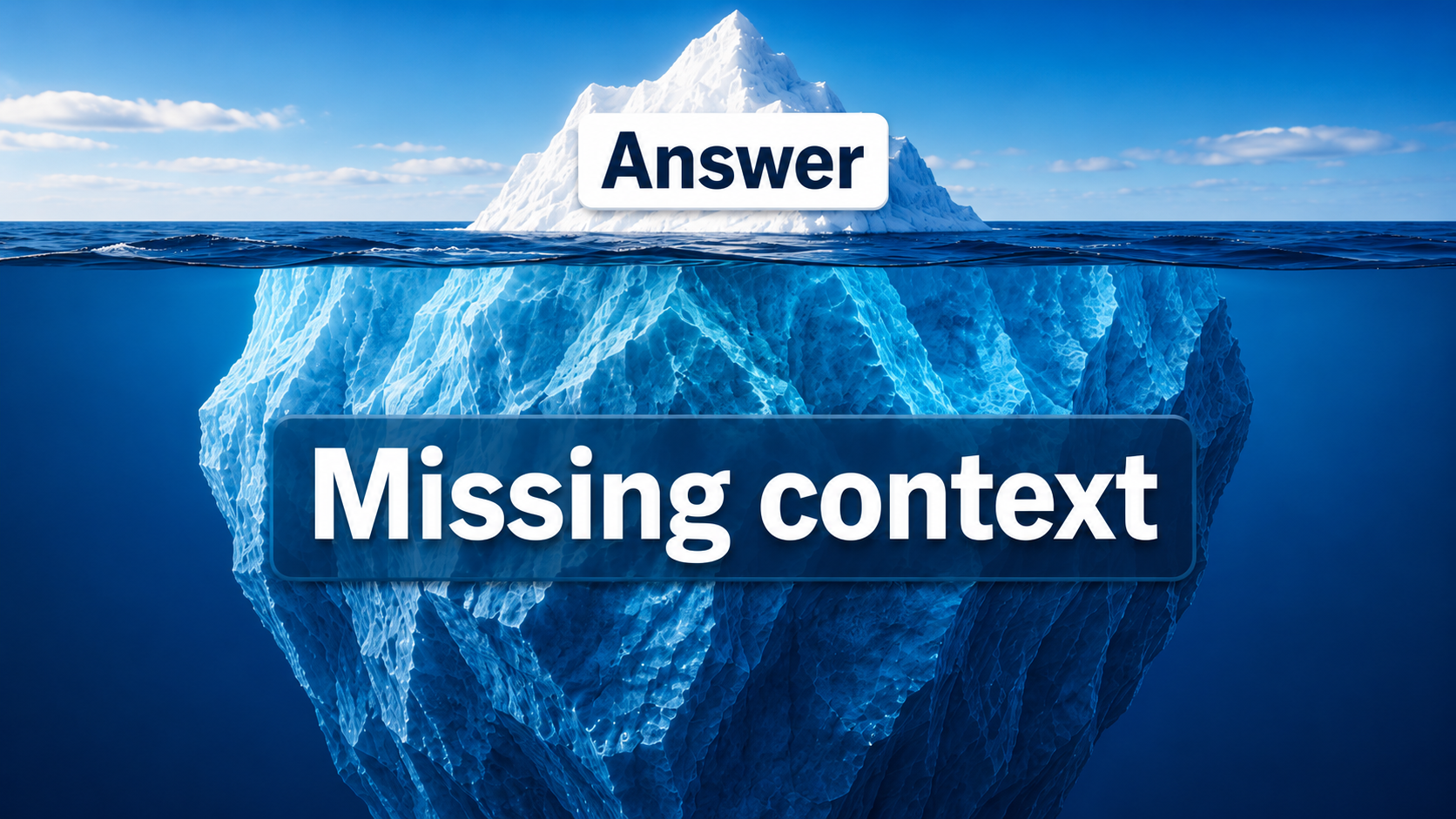
The original answer isn't wrong, exactly. It may be perfectly logical, well-structured, and helpful. But it was answering the question as it was framed, and doing that with only the context it was given. And sometimes the most important thing that's missing isn't another answer at all. It's the bit of context that would have changed the question in the first place.
⚡ You don't need to find every gap. You need to find the gap that could change the decision.
This is why "what did ChatGPT or my adviser miss?" isn't only a question about the answer they gave. It's a question about the context that answer was built on. Most of the gaps won't matter. You're looking for the one that does - the piece that, once it's in view, makes you ask something different.
Because that's the gap that turns a good answer into the wrong decision.
🚀 What to do next
If this feels familiar, start here:
👉 Run the Second Look Decision Diagnostic to check your decision
👉Read about checking business decisions
👉 📖 Read more on Second Look blog